
What do European ESG regulations mean for Balkan Tourism?
Just finished a two-day deep dive workshop for coaches and auditors of the Travelife for Tour Operators program, led by Robin Boustead, the author of “The ESG Reporting Manual”. Over the course of the two days, there was a lot of discussion about new mandates and laws for reporting on the various areas of sustainability (commonly referred to as ESG regulations) in the European Union.
If I had to give one important take-away message it would be this:
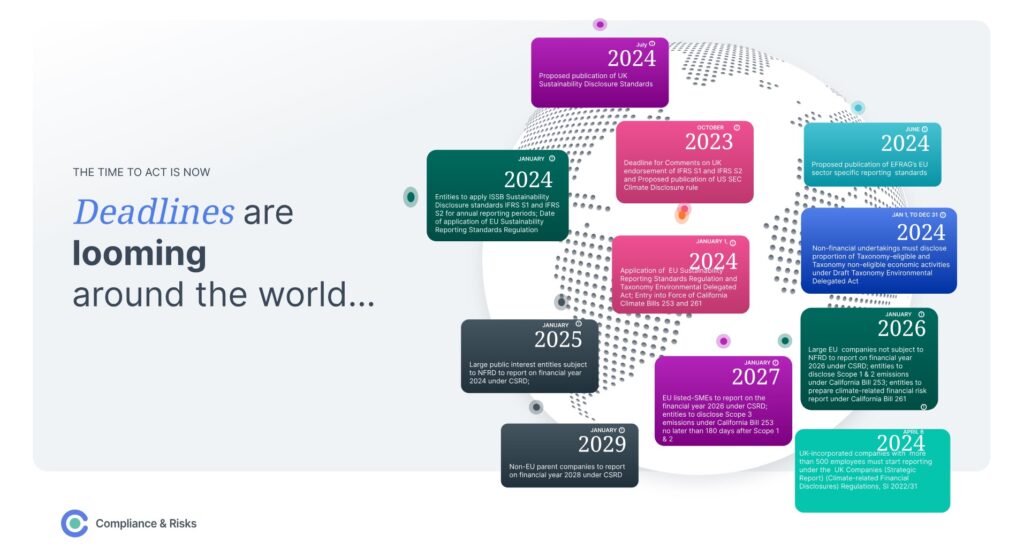
These new ESG (Environmental and Social Governance) regulations for businesses in the EU, Canada, the UK, will definitely impact tourism in the Balkans, particularly the highly-valued B2B partnerships. These regulations apply not only to how tourism businesses in Europe operate internally, but also their supply chain, their partners outside of the EU, who must also meet many of the same sustainability criteria, with evidence and assurance.
And it is not just the EU; Canada, the UK, and other countries are passing similar legislation. As these reporting mandates come into affect in the EU over the next few years, first for companies with over 5000+ employees, then smaller companies, I fear tourism businesses in the Balkans who ignore sustainability or greenwash their products will see their B2B partners dry-up, their business dwindle, and their relationships fade.
When these European companies have to decide which partners to keep, who can provide evidence of compliance, or what new partners they need to replace the old ones, they will be looking for tourism businesses who already have achieved some level of sustainability and/or have shown dedication to making the necessary changes.
The best advice I can give is to start making real change now. Start (or accelerate) your sustainability journey ASAP. The time for “We’ll think about it in the off-season” is over. Get involved in a GSTC-recognized or accredited program to see what the expectations are, and start working on them.
The worst case scenario is that some of these large outbound agencies stop marketing the Balkans, and significantly reduce the number of visitors they send to the Balkans, simply because they cannot find enough local capacity to meet their sustainability requirements. But a successful tourism business will know their customers and partners, anticipate their needs, and have made the necessary changes to survive in this new market landscape.
So, it looks like our international partners and guests may eventually drag the Balkans, reluctantly in some cases, onto a more genuinely sustainable tourism path, and the only question will be who will survive, and how much will the change hurt communities and wallets, as many tourism businesses play catch up, when they finally decide to get on board?